
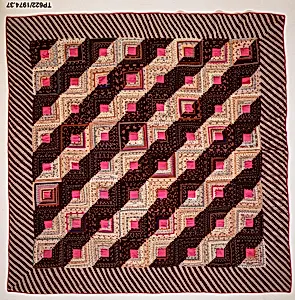
Quilt, Log Cabin pattern, Straight Furrow variation
Unknown Artist
ca. 1875
Medium
Wool and cotton
Dimensions
87 1/2 x 88 1/2 in. (222.3 x 224.8 cm)
Classification
Quilt
Culture
American
Department
The American Wing
Museum
Metropolitan Museum of Art, New York, NY
Credit
Purchase, Eva Gebhard-Gourgaud Foundation Gift and funds from various donors, 1974
Accession Number
1974.37
Rights
Public Domain
Art Historical Context
This stunning quilt, featuring the classic Log Cabin pattern in its Straight Furrow variation, to around 1875 and exemplifies folk art from the late 19th century.ed from wool and cotton fabrics meticulously pieced together, it an impressive 87½ x 88½ inches—perfect for a full bed coverlet. The Log Cabin design, with its concentric squares of fabric logs radiating from a central "fireplace" block (often red), evokes the pioneer spirit and log homes central to American frontier life. The Straight Furrow layout arranges these blocks in orderly rows, mimicking plowed fields and symbolizing agricultural rhythms. Quilts like this were typically made by women in rural communities, transforming scraps from worn clothing and textiles into both functional bedding and communal treasures. Produced during the post-Civil War era, when fabric was precious, this piece highlights resourceful artistry and the rise of quilt patterns as shared cultural language—passed down through "signatures" or social gatherings. Its acquisition by The Metropolitan Museum of Art's American Wing in 1974 underscores its value as a testament to everyday creativity in American history. Visitors will appreciate how such quilts blend utility with bold geometry, offering a tactile window into 19th-century domestic life and the ingenuity of unknown makers.