
Rank Badge with Lion of Asia
Unknown Artist
18th century
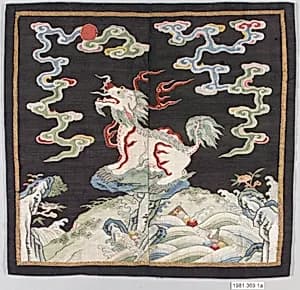
Medium
Silk, metallic thread
Dimensions
10 1/4 x 9 3/4 in. (26.04 x 24.77 cm)
Classification
Textiles-Woven
Culture & Period
China · Qing dynasty (1644–1911)
Department
Asian Art
Museum
Metropolitan Museum of Art, New York, NY
Credit
Gift of Mrs. Donald P. Spence, 1981
Accession Number
1981.369.1a
Rights
Public Domain
Tags
Art Historical Context
This exquisite **Rank Badge with Lion of Asia**, crafted in 18th-century China during the Qing dynasty (164–1911), is a finely woven textile emblem from the Metropolitan Museum of Art Asian Art collection. Measuring just 10¼ × 9¾ inches, these compact squares were essential insignia sewn onto the chests and backs of official robes denoting the wearer's rank in the imperial. Gifted to the museum in 198 by Mrs. Donald P Spence, it exemplifies the opulent craftsmanship of Qing court attire. The badge features a majestic lion, a potent symbol of power, protection, and ferocity in Chinese iconography—often reserved for high-ranking military officials. Lions, known as "lions of Asia" for their exotic allure, embodied imperial authority and warded off evil, reflecting the Manchu Qing rulers' emphasis on martial prowess and hierarchical order. Such badges were mandatory for mandarins, visually enforcing the rigid social structure of the empire. Woven from lustrous silk and shimmering metallic threads, the piece showcases advanced textile techniques like kesi (slit-tapestry weaving), which allowed for intricate details and a jewel-like gleam. This medium not only highlighted wealth but also ensured durability for ceremonial wear, blending artistry with symbolism in a single, wearable masterpiece. A window into Qing elite life!