
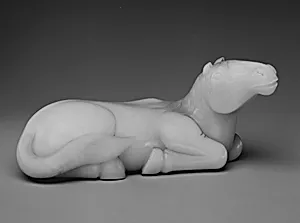
清中期 白玉臥馬|Reclining Horse
Unknown Artist
18th century
Medium
Jade (nephrite)
Dimensions
H. 3 3/8 in. (8.6 cm); W. 7 5/8 in. (19.4 cm)
Classification
Jade
Culture & Period
China · Qing dynasty (1644–1911)
Department
Asian Art
Museum
Metropolitan Museum of Art, New York, NY
Credit
The Friedsam Collection, Bequest of Michael Friedsam, 1931
Accession Number
32.100.455
Rights
Public Domain
Tags
Art Historical Context
This exquisite reclining horse, carved from pristine white nephrite jade during China's Qing dynasty (mid-18th century), captures the serene majesty of the animal in a compact form—measuring just 3⅜ inches high and 7⅝ inches wide. Nephrite, prized for its toughness and subtle translucency, was a favored medium among Qing artisans, allowing for intricate detailing despite the stone's density. The horse's relaxed pose, with legs tucked beneath and head gently resting, exemplifies the period's mastery of jade carving, where craftsmen used fine abrasives and diamond-tipped tools to polish surfaces to a luminous glow. In Chinese culture, horses symbolized power, speed, and imperial prestige, often evoking the mythical "heavenly steeds" of legend. During the Qing era (1644–1911), under Manchu emperors who revered equestrian prowess, such sculptures adorned scholarly studios or elite collections as symbols of harmony and vitality. This piece, from the renowned Friedsam Collection now at The Metropolitan Museum of Art, reflects the dynasty's artistic zenith, blending technical virtuosity with poetic restraint. Visitors will appreciate its cool touch and timeless elegance, a window into imperial China's refined aesthetic.