
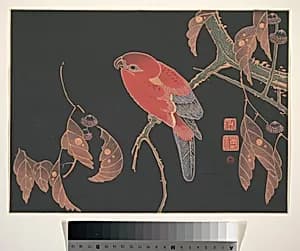
Red Parrot on the Branch of a Tree
ca. 1900
Medium
Woodblock print; ink and color on paper
Dimensions
9 11/16 x 13 1/4 in. (24.6 x 33.7 cm)
Classification
Prints
Culture & Period
Japan · Meiji period (1868–1912)
Department
Asian Art
Museum
Metropolitan Museum of Art, New York, NY
Credit
Rogers Fund, 1925
Accession Number
MJP15
Rights
Public Domain
Tags
Art Historical Context
Behold the vibrant *Red Parrot on the Branch of a Tree*, captivating woodblock print by It Jakuchū, created around 1900 during Japan's Meiji period (186–1912). This and color on paper work, measuring 9 11/16 x 13 1/4 inches, exemplifies the enduring tradition of Japanese printmaking, where intricate carvings on wood blocks allowed for the mass production of stunning imagery. Acquired through the Rogers Fund in 5, it now graces the Asian Art department at the Metropolitan Museum of Art. In the Meiji era, Japan underwent rapid modernization while cherishing its artistic heritage, blending Eastern aesthetics with Western influences. Jakuchū's depiction of the striking red parrot perched amid lush leaves highlights the period's fascination with nature's vivid details—parrots, as exotic birds, symbolized rarity and beauty in Japanese culture. The meticulous layering of colors and inks creates a sense of lifelike presence, drawing viewers into the bird's poised elegance against the delicate branches. This print invites us to appreciate the technical mastery of woodblock printing, a craft that captured fleeting beauty for everyday enjoyment. Whether admiring the parrot's fiery plumage or the textured foliage, it offers a window into Meiji Japan's harmonious blend of tradition and transformation.
About the Artist
Itō Jakuchū · 1716–1800
Painter and printmaker of the Middle Edo period. He studied the methods of the Kanō School, but soon became dissatisfied and began to turn to the works of the Chinese masters of the Song and Yuan periods for inspiration. He believed the true art of painting lay in the faithful representation of nature, excelling in depictions of plants and animals. His work is distinguished by bright colors, decor...