
Reiziger
1845 - 1846
Medium
lithography
Dimensions
470; 329
Rights
Public Domain
About this artwork
lithografie
Art Historical Context
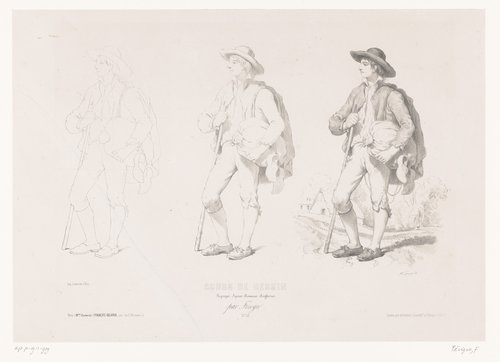
**Reiziger (The Traveler)** Created by Fortuné Féio between 1845 1846, *Reiziger* is a striking lithograph measuring 329 mm high by 470 mm wide. The title, Dutch for "traveler," evokes the era's fascination with exploration and mobility during Europe's Romantic period, when journeys—whether by rail, ship, or foot—symbolized progress and adventure. Férogio, a lesser-known lithographer likely active in the Low Countries, captures this spirit through the medium's versatile capabilities. Lithography, invented in the late 18th century, revolutionized printmaking by allowing artists to draw directly on limestone with greasy crayons or ink, which repelled water during printing. By the 1840s, it had become a democratic art form, enabling affordable reproductions of detailed illustrations for books, posters, and portfolios. Férogio's piece exemplifies this technique's precision, producing rich tonal gradations and fluid lines that mimic drawing. This work holds cultural importance as a window into mid-19th-century visual culture, when lithography bridged fine art and mass media. Visitors can appreciate how *Reiziger* reflects the growing accessibility of imagery, making art a companion for the wandering spirit of the age.