
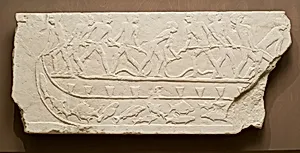
Relief fragment showing fishing scene
Unknown Artist
ca. 2575–2465 B.C.
Medium
Limestone
Dimensions
H. 34.5 cm
Classification
Relief, fishing scene
Period
Old Kingdom
Department
Egyptian Art
Museum
Metropolitan Museum of Art, New York, NY
Credit
Gift of Maguid Sameda, 1958
Accession Number
58.161
Rights
Public Domain
Tags
Art Historical Context
This limestone relief fragment, created during Egypt’s Old Kingdom around 2575–2465 B.C., captures a lively fishing scene from Dynasty 4. Such carvings frequently adorned the walls of elite tombs, where images of daily activities were believed to sustain the deceased in the afterlife. The fragment’s modest scale—measuring just over a foot in height—suggests it once formed part of a larger narrative sequence illustrating the abundance of the Nile. Fishing scenes like this one highlight the river’s central role in ancient Egyptian life, supplying food, transportation, and economic prosperity. The depiction of men actively catching fish reflects both practical labor and symbolic themes of renewal and plenty. Rendered in limestone, a material readily available along the Nile and favored for its fine grain, the relief would originally have been painted in bright colors, enhancing the sense of movement and vitality. As a work from the pyramid age, the fragment exemplifies the Old Kingdom’s refined approach to low-relief carving, where crisp outlines and subtle modeling conveyed depth without deep undercutting. Today it offers visitors a glimpse into the harmonious relationship between Egyptians and their environment, preserved through the careful craftsmanship of anonymous artisans.