
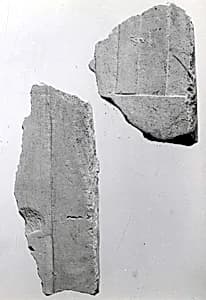
Relief fragment, tomb of Meketre
Unknown Artist
ca. 1981–1975 B.C.
Medium
Limestone, paint
Classification
Relief fragment, tomb of Meketre
Period
Middle Kingdom
Department
Egyptian Art
Museum
Metropolitan Museum of Art, New York, NY
Credit
Rogers Fund and Edward S. Harkness Gift, 1920
Accession Number
20.3.1032
Rights
Public Domain
Art Historical Context
This delicate limestone relief fragment originates from the tomb of Mre, a high-ranking official who served under pharaohs of Egypt's Middle Kingdom, specifically Dynasty 12 (ca. 1981–1975 B.C.). Discovered near Deir el-Bahri, the tomb is renowned for its vivid depictions of daily life, provisioning the deceased for eternity. Acquired by the Metropolitan Museum of Art in 0 through the Rogers Fund and Edward S.ness Gift, it offers a glimpse into the refined artistry of this prosperous era, when Egypt enjoyed stability and cultural flourishing after the First Intermediate Period. Carved in low relief and traces of vibrant paint, the fragment exemplifies Middle Kingdom techniques: artists skillfully modeled figures with naturalistic proportions and expressive details, a subtle evolution from the more rigid Old Kingdom style. Paint—typically mineral-based pigments like red ochre and Egyptian blue—brought scenes to life, ensuring their magical potency in the afterlife. Such tomb decorations invoked offerings of food, animals, and attendants, reflecting deep-seated beliefs in the ka (spirit) and ma'at (cosmic order). For visitors, this piece illuminates how elite Egyptians like Meketre invested in immortality through art, blending piety, craftsmanship, and everyday realism in a single, enduring slab.