
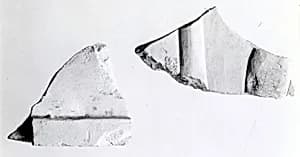
Relief fragment, tomb of Meketre
Unknown Artist
ca. 1981–1975 B.C.
Medium
Limestone, paint
Dimensions
H. 4.2 × W. 6.9 × D. 0.8 cm (1 5/8 × 2 11/16 × 5/16 in.)
Classification
Relief fragment, tomb of Meketre
Period
Middle Kingdom
Department
Egyptian Art
Museum
Metropolitan Museum of Art, New York, NY
Credit
Rogers Fund and Edward S. Harkness Gift, 1920
Accession Number
20.3.979
Rights
Public Domain
Art Historical Context
This delicate limestone relief fragment hails from the tomb of Meketre, a prominent official who served under pharaohs of Egypt's Middle Kingdom, specifically Dynasty 12 (ca. 1981–1975 B.C.). Discovered in his Theban tomb, such fragments were part of larger wall decorations meant to ensure the deceased's eternal prosperity. Meketre's tomb is renowned for its exquisite wooden models of daily life, and this piece complements that tradition, offering a glimpse into the refined artistry of the era. Carved in low relief and traces of vibrant paint remain, the fragment exemplifies Middle Kingdom techniques: precise incising for depth and illusion, with colors like red, blue, and yellow evoking the vibrancy of the afterlife. At just 4.2 × 6.9 × 0.8 cm, its small scale belies its cultural weight—tomb reliefs served as magical blueprints, depicting offerings, servants, and Nile scenes to sustain the ka (spirit) forever. Acquired through the Rogers Fund and Edward S. Harkness Gift in 1920, this artifact at the Metropolitan Museum of Art highlights the Middle Kingdom's artistic renaissance, blending realism with symbolism to bridge the mortal world and eternity. A tiny window into ancient Egyptian devotion and skill!