
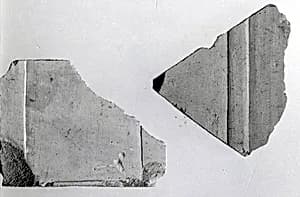
Relief fragment, tomb of Meketre
Unknown Artist
ca. 1981–1975 B.C.
Medium
Limestone, paint
Classification
Relief fragment, tomb of Meketre
Period
Middle Kingdom
Department
Egyptian Art
Museum
Metropolitan Museum of Art, New York, NY
Credit
Rogers Fund and Edward S. Harkness Gift, 1920
Accession Number
20.3.1014
Rights
Public Domain
Art Historical Context
This exquisite limestone relief fragment hails from the tomb of Meketre, a prominent official who served under pharaohs of Egypt's Middle Kingdom, specifically Dynasty 12 (ca. 1981–1975 B.C.). Discovered in his Theban tomb, such fragments offer a glimpse into the elite's afterlife preparations during a period of renewed artistic vigor and stability following the First Intermediate Period. Acquired by the Metropolitan Museum of Art through the Rogers Fund and Edward S. Harkness Gift in 1920, it exemplifies the refined craftsmanship of ancient Egyptian funerary art. Carved in low relief and vividly painted—a hallmark technique of the era—the fragment's limestone medium allowed for intricate detailing and durable preservation. Artists employed sunk reliefs, where figures were incised into the stone and then highlighted with mineral-based pigments like ochre reds and Egyptian blue, creating a lively, eternal tableau. This method not only withstood the tomb's sealed environment but also animated scenes of daily life, provisioning, or offerings, ensuring Meketre's eternal sustenance. Culturally, these reliefs underscore the Middle Kingdom's emphasis on realism and hierarchy in tomb decoration, blending piety with administrative pride. Meketre's tomb, famed for its accompanying wooden models, highlights how art bridged the mortal and divine realms, inviting us today to ponder the ancient Egyptian quest for immortality.