
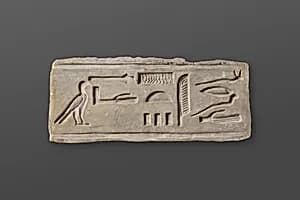
Relief fragment, tomb of Mereri
Unknown Artist
ca. 2100–2030 B.C.
Medium
Limestone
Dimensions
H. 14.5 × W. 34.5 × D. 5.4 cm (5 11/16 × 13 9/16 × 2 1/8 in.)
Classification
Relief fragment, tomb of Mereri
Period
First Intermediate Period
Department
Egyptian Art
Museum
Metropolitan Museum of Art, New York, NY
Credit
Gift of Egypt Exploration Fund, 1898
Accession Number
98.4.3u
Rights
Public Domain
Art Historical Context
This delicate limestone relief fragment hails from the tomb of Mer, dating to Egypt's First Intermediate Period (ca. 2100–2030 B.C.), specifically Dynasty 9. Carved during a time of political fragmentation following the Old Kingdom's grandeur, such tomb decorations served vital funerary purposes, ensuring the deceased's eternal sustenance through depictions of offerings, daily life, or. Though incomplete, this 14.5 × 34.5 × 5.4 cm piece exemplifies the era's shift toward more provincial artistry, produced in regional workshops like those at Heracleopolis. Crafted in low-relief technique on durable limestone—a favored medium for its fine grain and workability— the fragment reflects ancient Egyptian mastery of sunk relief, where figures were incised and polished for subtle shadow play under temple or tomb lighting. These works held profound cultural importance, embodying *ka* (life force) preservation and social status, even amid the period's instability. Acquired as a gift from the Egypt Exploration Fund in 1898, this artifact now graces the Metropolitan Museum of Art's Egyptian Art department, offering visitors a tangible window into a turbulent yet resilient chapter of pharaonic history.