
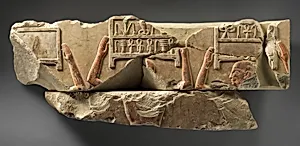
Relief of offering bearers carrying boxes
Unknown Artist
ca. 2051–2030 B.C.
Medium
Limestone, paint
Dimensions
H. 21 cm (8 1/4 in.); W. 53 cm (20 7/8 in.); D. 8 cm (3 1/8 in.)
Classification
Relief, men carrying chests, Neferu, linen
Period
Middle Kingdom
Department
Egyptian Art
Museum
Metropolitan Museum of Art, New York, NY
Credit
Rogers Fund, 1926
Accession Number
26.3.353p
Rights
Public Domain
Tags
Art Historical Context
This exquisite limestone relief, dating to Egypt's Middle Kingdom (ca. 2051–2030 B.C.) during Dynasty 11, captures a procession of offering bearers carrying boxes laden with goods. Carved in low relief and once vividly painted—traces of which may remain—the scene exemplifies the era's tomb art, designed to ensure the deceased's eternal sustenance in the afterlife. Created around the time of pharaohs like Mentuhotep, who reunified Egypt after centuries of division, such works reflect a renewed emphasis on stability, piety, and elaborate funerary rituals. The artwork's modest dimensions (21 cm high, 53 cm wide) belie its masterful craftsmanship: figures stride purposefully forward, their hands and heads rendered with striking naturalism and attention to detail, as highlighted by the piece's focus on these anatomical features. Limestone, quarried from nearby sites, was a favored medium for its workability and durability, allowing sculptors to incise shallow forms that caught the light dramatically in tomb chapels. In ancient Egyptian culture, these bearers symbolized abundance and divine favor, magically providing food and offerings forever. Acquired through the Rogers Fund in 1926, this relief from the Metropolitan Museum of Art invites us to glimpse the spiritual worldview of a pivotal dynasty, blending artistry with profound religious purpose.