
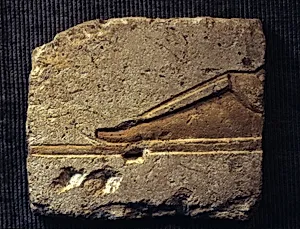
Relief with a royal foot
Unknown Artist
ca. 1353–1336 B.C.
Medium
Limestone, paint (mostly modern)
Dimensions
h. 22.9 cm (9 in); w. 26.7 cm (10 1/2 in)
Classification
Talatat, royal foot
Period
New Kingdom, Amarna Period
Department
Egyptian Art
Museum
Metropolitan Museum of Art, New York, NY
Credit
Gift of Mr. and Mrs. Jonathan P. Rosen, 1991
Accession Number
1991.237.23
Rights
Public Domain
Tags
Art Historical Context
This intriguing limestone relief fragment, titled *Relief with a Royal*, hails from Egypt's New Kingdom during the revolutionary Amarna Period (ca. 1353–1336 B.C.), part of Dynasty 18. Carved in low relief, it captures a single royal foot—likely from a larger scene depicting a pharaoh or high-ranking figure—measuring just 9 by 10½ inches. The Amarna era, under Akhenaten's rule, marked a bold artistic shift toward naturalism and elongated proportions, breaking from rigid Old Kingdom conventions to emphasize the human form in service of the sun god Aten's worship. Originally painted for vivid color, much of the pigmentation today is modern restoration, highlighting conservation efforts to preserve these ancient treasures. In Egyptian art, royal feet symbolized power and divine authority, often shown in dynamic poses striding forward or atop foes, underscoring the pharaoh's role as protector and god-king. As a modest yet evocative survivor from Akhenaten's short-lived cultural experiment, this piece at the Metropolitan Museum of Art (gift of Mr. and Mrs. Jonathan P. Rosen, 1991) offers a tantalizing glimpse into a transformative moment in history, where art became a tool for religious and political innovation.