
Reparatie van het Heidelberger wijnvat
1716
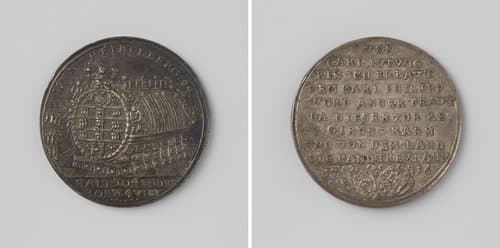
Medium
striking (metalworking)
Dimensions
13.99; 3.3
Rights
Public Domain
About this artwork
diameter 3,3 cm x gewicht 13,99 gr
Art Historical Context
### Reparatie van hetidelberger Wijnvat (Repair of the Heidelberg Wine) This intriguing anonymous artwork from 1716 is a finely crafted metal piece, likely a commemorative medal, produced through the striking technique in metalworking. Measuring just 3.3 cm in diameter and weighing 13.99 grams, its petite scale belies its connection to one of Europe's most legendary engineering feats: the massive Heidelberg Tun, a gigantic wine barrel housed in Heidelberg Castle, Germany. The title directly references the "repair" of this iconic vat, suggesting the medal celebrates a significant maintenance effort on the barrel, which has symbolized opulence, viticulture, and princely excess since the Baroque era. Struck medals like this were popular in the 18th century for marking historical events, blending artistry with propaganda. The striking process—hammering a hardened steel die into a soft metal blank—allowed for intricate relief designs, capturing fine details in a durable form. Though the artist remains unknown, this piece reflects the skilled craftsmanship of German medalists during a time when such objects served as portable souvenirs or tokens of prestige. Today, it offers a window into 18th-century European court culture, where even barrel repairs warranted artistic commemoration, highlighting the vat's enduring fame as the world's largest wine cask. A delightful curiosity for visitors fascinated by history's quirky intersections of engineering and art! (198 words)
About the Artist
anonymous
In the vast tapestry of art history, "Anonymous" stands not as a singular individual but as a collective designation for countless unidentified creators whose works have endured across millennia. These artists, spanning prehistoric cave painters to medieval illuminators and folk craftsmen, produced the foundational layers of human visual culture. Prior to the Renaissance, when individual fame emer...