
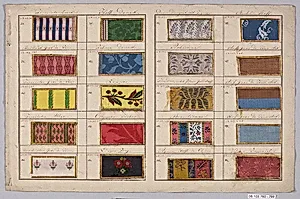
Ribbon
Unknown Artist
18th–19th century
Dimensions
2 x 1 inches (approx.) 5.1 x 2.5 cm
Classification
Textiles-Trimmings
Culture
probably European
Department
European Sculpture and Decorative Arts
Museum
Metropolitan Museum of Art, New York, NY
Credit
Rogers Fund, 1908
Accession Number
08.103.793
Rights
Public Domain
Art Historical Context
Nestled in the Metropolitan Museum of Art's European Sculpture and Decorative Arts, this delicate "Ribbon" exemplifies the exquisite craftsmanship of 18th–19th European textiles. Measuring just2 x 1 inches (5.1 x 2.5 cm), it belongs to the category of Textiles-Trimmings, likely used to adorn garments, furnishings, or accessories. Acquired through the Rogers Fund in 8, this tiny artifact whispers of a time when such trimmings were essential to opulent fashion and interior design, transforming everyday items into statements of elegance and status. Though the artist remains unknown, the ribbon's probable European origin places it within a rich tradition of textile innovation during the Enlightenment and Romantic eras. Weavers and embroiderers employed fine threads—possibly silk or metallic yarns—to create intricate patterns that caught the light, adding texture and shimmer. These trimmings were not mere decoration; they reflected social hierarchies, with elaborate ribbons signaling wealth at royal courts or in bourgeois homes. Today, this unassuming piece invites visitors to marvel at the precision required for such miniature artistry. In an age of mass production, it reminds us of the skilled hands behind Europe's decorative legacy, preserved for posterity at The Met.