
Rice-Drying Frame
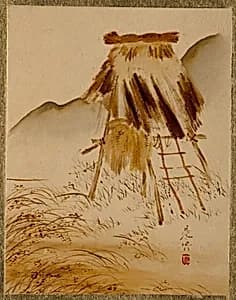
Medium
Album leaf; lacquer on paper
Dimensions
4 1/2 x 3 1/2 in. (11.4 x 8.9 cm)
Classification
Paintings
Culture & Period
Japan · Edo period (1615–1868)
Department
Asian Art
Museum
Metropolitan Museum of Art, New York, NY
Credit
The Howard Mansfield Collection, Purchase, Rogers Fund, 1936
Accession Number
36.100.133
Rights
Public Domain
Art Historical Context
Nestled within the intimate format of an album leaf,Rice-Drying Frame* Shibata Zeshin a slice of everyday Japanese rural life during the Edo period (161–1868). Measuring just 4½ x 3½ inches, this delicate work depicts a traditional wooden frame used for drying rice—a staple crop that sustained Japan's agrarian society. Zeshin, a master innovator in lacquer art, elevates this humble subject into a poetic emblem of seasonal harmony and impermanence, reflecting the era's fascination with nature's cycles amid urbanizing prosperity. What sets this piece apart is Zeshin's groundbreaking use of lacquer on paper, a technique he pioneered in urushi-e (lacquer painting). Typically applied to wood or metal, lacquer here creates luminous, jewel-like effects with its glossy sheen and subtle layering, mimicking ink washes while offering unparalleled durability and depth. As a leading figure bridging Edo and Meiji eras, Zeshin's work blended Rinpa aesthetics—known for bold patterns and gold leaf—with hyper-realistic detail, making everyday objects shine with artistic reverence. Acquired through The Howard Mansfield Collection at the Metropolitan Museum of Art, this album leaf invites visitors to appreciate Japan's material culture: how lacquer, once utilitarian, became a canvas for philosophical beauty. A testament to Zeshin's genius, it reminds us that true artistry often blooms from the ordinary.
About the Artist
Shibata Zeshin · 1807–1891
Japanese, 1807–1891