
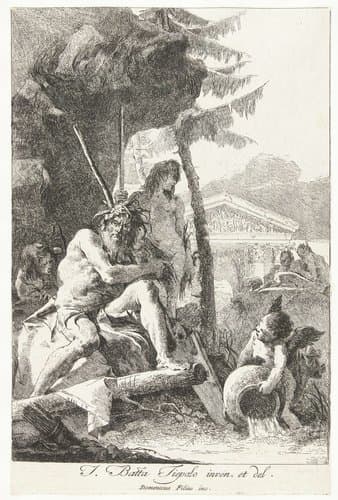
Riviergod en twee jonge mannen en putto op oever
1748 - 1752
Medium
etching
Dimensions
197; 302
Rights
Public Domain
About this artwork
Aankoop uit het J.W. Edwin Vom Rath Fonds/Rijksmuseum Fonds
Art Historical Context
**Riviergod en twee jonge mannen en putto oever** *Giovanni Domenico Tiepolo etching, 1748–1752, 302 × 197 mm* into the whimsical world of 18th Venice with this enchanting etching by Giovanni Domenico Tiepolo, son of the famed Baroque master Giovanni Battista Tiepolo Created during Domenico's early career (1748–1752), the print depicts a lively mythological riverside scene: a majestic river god reclines amid two youthful men and a playful putto—a chubby, winged child symbolizing innocence and delight. This composition captures the Rococo spirit, blending graceful figures with lush, imaginary landscapes in a celebration of classical antiquity reimagined with Venetian exuberance. Tiepolo's etching technique shines here, as he masterfully incised fine lines into a copper plate, allowing acid to bite intricate details like rippling water, flowing drapery, and expressive faces. Etchings like this were revolutionary for their reproducibility, making high art accessible beyond oil paintings. Part of Tiepolo's innovative print series, such as the *Vari Capricci*, it showcases his fluid linework and dynamic compositions, bridging his father's grandeur with a lighter, more intimate touch. Acquired through the J.W. Edwin Vom Rath and Rijksmuseum Funds, this gem highlights Tiepolo's pivotal role in preserving Rococo's playful elegance. Imagine it adorning a collector's cabinet, whispering tales of gods and rivers to enchanted viewers.
About the Artist
Giovanni Domenico Tiepolo · 1727–1804
Giovanni Domenico Tiepolo (1727-1804) was a Venetian painter, printmaker, and draftsman whose career spanned the twilight of the Rococo era. Born on August 30, 1727, in Venice as the eldest son of the celebrated Giovanni Battista Tiepolo, he worked both in his father's shadow and as a significant independent artist who developed a distinctly earthbound and humanistic vision. Domenico's importance...