
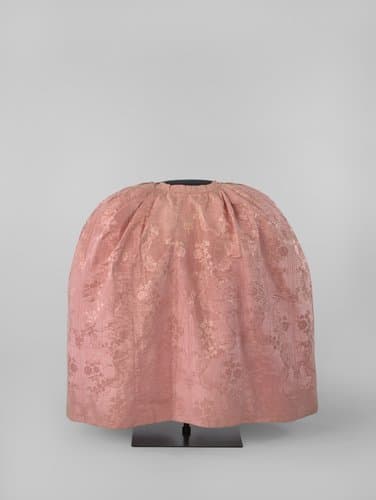
Rok van zalmroze zijdedamast met moiré-effect
c. 1750 - c. 1770
Medium
damask
Dimensions
93
Rights
Public Domain
About this artwork
Gift of Jonkvrouw C.I. Six, 's-Graveland
Art Historical Context
Step into the opulent world of 18th-century European fashion with this exquisite *Rok van zalmroze zijdedamast met moiré-effect*, or "Skirt of salmon-pink silk damask with moiré effect." Dating to around 1750–1770, this anonymous textile masterpiece measures approximately 93 cm in length and showcases the lavish craftsmanship of the Rococo era. The soft salmon-pink hue glows with the shimmering iridescence of silk damask—a reversible woven fabric where intricate floral or geometric patterns emerge from the interplay of satin and twill weaves, creating depth and luxury fit for aristocratic wardrobes. The standout moiré effect adds a mesmerizing, watery ripple to the surface, likely achieved through calendering, where the fabric is pressed between engraved rollers. This technique elevated damask from mere cloth to high art, symbolizing wealth and refinement during the Enlightenment's indulgent textile trade. Produced in weaving centers like Lyon or Dutch looms, such skirts draped over panniers in grand ballrooms, embodying the era's love for playful elegance and sensory delight. Generously donated by Jonkvrouw C.I. Six of 's-Graveland, this piece preserves a slice of Dutch nobility's elegance, inviting us to admire how fabric once whispered status and style.
About the Artist
anonymous
In the vast tapestry of art history, "Anonymous" stands not as a singular individual but as a collective designation for countless unidentified creators whose works have endured across millennia. These artists, spanning prehistoric cave painters to medieval illuminators and folk craftsmen, produced the foundational layers of human visual culture. Prior to the Renaissance, when individual fame emer...