
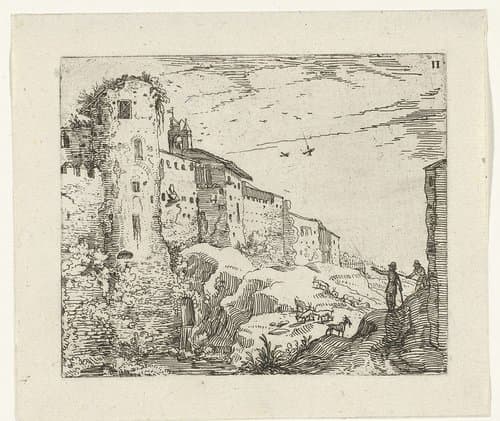
Romeinse ruïnes (serie 1)
1594 - 1618
Medium
etching
Dimensions
127; 105
Rights
Public Domain
About this artwork
verzamelaarsmerk, verso, gestempeld: Lugt 240
Art Historical Context
**Romeinse Ruïnes (Serie 1)** by Guilliam van Nieandt II (c. 1584–1635) is a delicate etching from the late 16th to early 17th century, measuring just 105 × 127 mm. Created in Antwerp during the Dutch Golden Age's early stirrings, this print captures imagined Roman ruins—crumbling arches, columns, and overgrown vestiges of antiquity. Van Nieulandt, a Flemish artist from a family of painters and engravers, specialized in such capriccios, blending architectural accuracy with poetic fantasy to evoke the grandeur of ancient Rome. Etching, van Nieulandt's chosen medium, allowed for intricate lines and tonal depth through acid-bitten plates, making these small works ideal for collectors' albums. Produced between 1594 and 1618, they reflect Northern Europe's fascination with classical heritage amid the Renaissance revival, when artists like him drew from prints and traveler accounts rather than direct Italian visits. This series embodies "paper museums," portable evocations of the past. Bearing a collector's mark (Lugt 240) on the verso, the print hints at its prized status among connoisseurs. For visitors, it offers a window into how 17th-century viewers romanticized decay, celebrating endurance amid time's passage—a timeless meditation on history's whispers. (198 words)