
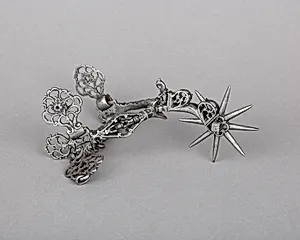
Rowel Spur (Left)
Unknown Artist
first half 18th century
Medium
Iron alloy
Dimensions
L. 6 1/2 in. (16.5 cm); W. 3 3/4 in. (9.5 cm); Diam. of rowel 2 3/4 in. (7 cm); Wt. 7.8 oz. (221.1 g)
Classification
Equestrian Equipment-Spurs
Culture
Mexican
Department
Arms and Armor
Museum
Metropolitan Museum of Art, New York, NY
Credit
Gift of Stephen V. Grancsay, 1942
Accession Number
42.50.295
Rights
Public Domain
Art Historical Context
This finely crafted rowel spur from the left foot, dating to the first half of the 18th, exemplifies the robust equestrian equipment essential to colonial Mexican life. Forged from iron alloy, it measures 6½ inches long with substantial 2¾-inch diameter rowel—a spiked wheel designed to urge horses forward during riding, ranching, or maneuvers. Weighing nearly 8 ounces, its sturdy construction reflects the demands of daily use on vast haciendas and rugged terrains of New Spain, where horsemanship was central to both Indigenous and Spanish-influenced cultures. As a piece of Mexican material culture, this spur highlights the skilled metalworking traditions of the period, blending European spur designs with local adaptations for functionality and durability. Spurs like this were status symbols for vaqueros and cavalrymen, underscoring Mexico's pivotal role in the equestrian history of the Americas. Though by an unknown artisan, its precise proportions and enduring form speak to masterful blacksmithing techniques passed down through generations. Today, gifted to the Metropolitan Museum of Art in 1942 by Stephen V. Grancsay, this artifact invites us to imagine the thunder of hooves across colonial landscapes, bridging the worlds of utility and artistry in the Arms and Armor collection.