
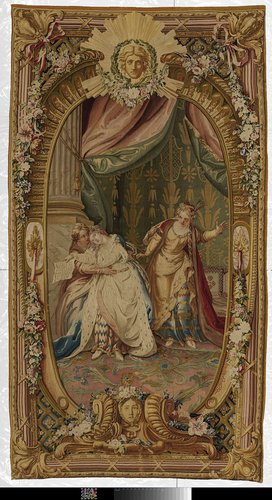
Roxane en Atalide
Medium
tapestry
Dimensions
175; 325
Rights
Public Domain
About this artwork
wol, zijde; 8,5 kettingdraden per cm
Art Historical Context
**Roxane en Atal**, woven in 1776 by the Manufacture Royale des Gobel, exemplifies the pinnacle of French tapestry artistry during the late Ancien Régime. This piece, measuring 325 cm by 175 cm wide, likely depicts the tragic figures Roxane and Atalide Jean Racine's 1672 play *Bajazet*, capturing a moment of intense drama amid Ottoman intrigue and forbidden love. Produced under royal patronage for palaces like Versailles, Gobel tapestries served as symbols of Louis XVI's courtly splendor, blending luxury with storytelling to adorn grand interiors. Crafted from wool and silk on a high-warp loom, the tapestry boasts an impressive 8.5 warp threads per centimeter—a testament to the Gobelins weavers' mastery. This fine density allowed for exquisite detail, vibrant colors, and lifelike textures, rivaling painting. Silk threads added luminosity and sheen, enhancing the emotional depth of the scene. Gobelins artists worked from detailed cartoons by renowned painters, ensuring historical accuracy and neoclassical elegance. As a cultural artifact, *Roxane en Atalide* reflects Enlightenment-era fascination with classical tragedy, preserving Racine's themes of passion and fate in enduring fiber. Visitors can marvel at how these massive wall hangings transformed spaces into immersive theaters of history and emotion.
About the Artist
Manufacture Royale des Gobelins
The Manufacture Royale des Gobelins, a cornerstone of French decorative arts, originated in the mid-15th century as a dyeing workshop established by the Gobelin family along the Bièvre River in Paris's Faubourg Saint-Marcel. Renowned for their scarlet dye, the Gobelins supplied the foundation for what became Europe's premier tapestry factory. In 1601, King Henry IV rented the site to Flemish weave...