
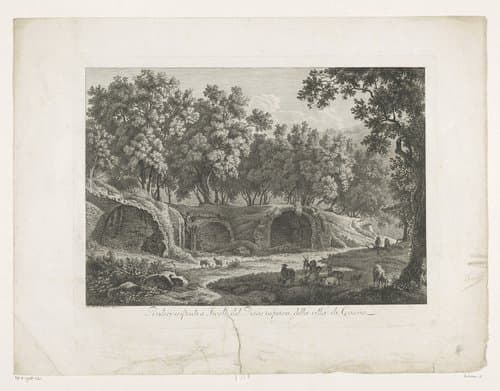
Ruderi esistenti a Tivoli del Piano inferiore della villa di Cassio
Medium
etching
Dimensions
381; 282
Rights
Public Domain
About this artwork
verzamelaarsmerk, verso, gestempeld: Lugt 2228
Art Historical Context
Created in 1793 by German artist Albert Christoph Dies, this etching captures the atmospheric ruins of the Villa of Cassius in Tivoli, Italy. The title, translating to “Existing Ruins at Tivoli of the Lower Floor of the Villa of Cassius,” reflects the late-eighteenth-century fascination with classical antiquity. Tivoli, with its dramatic landscape and ancient remains, was a favored destination for artists and travelers on the Grand Tour. Dies worked in the medium of etching, prized for its ability to render precise architectural detail while evoking the textures of weathered stone. Measuring 282 by 381 millimeters, the print belongs to a period when such views served both as souvenirs and scholarly records, documenting sites before further decay or excavation. The stamp on the verso (Lugt 2228) hints at its later journey through distinguished collections. Today the etching offers viewers a quiet encounter with Rome’s enduring legacy, reminding us how artists of the Enlightenment era transformed ruins into emblems of cultural memory and timeless beauty.
About the Artist
Albert Christoph Dies · 1755–1822
Albert Christoph Dies (1755–1822) was a German painter and writer who spent a significant portion of his career in Italy, working in the landscape tradition that drew so many Northern European artists to Rome during the late eighteenth century. Born in Hanover, Dies trained in the artistic milieu of the time and eventually made his way to Rome, where he became part of the community of German-speak...