
Ruïne van de thermen van Trajanus of Mezza Via aquaduct
1624 - 1629
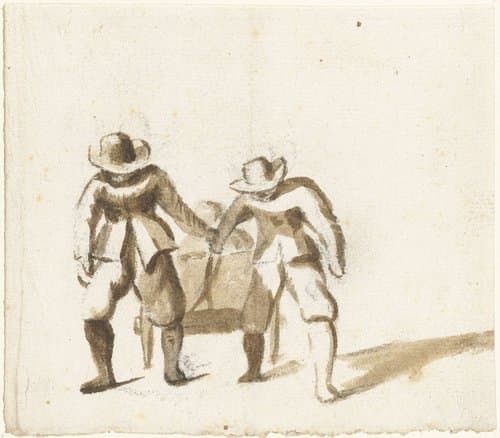
Medium
brush
Dimensions
87; 81
Rights
Public Domain
About this artwork
height 87 mm x width 81 mm
Art Historical Context
Bartholomeus Breen's *Ruïne van de thermen van Trajanus of Me Via aquaduct* (c. 1624–1629) invites visitors into a intimate glimpse of ancient Rome's grandeur in decay. This diminutive brush work, measuring 87 mm high by 81 mm wide, captures evocative ruins of Emperor Trajan's Baths or the nearby Mezza Via aqueduct—monuments from the 2nd century AD that symbolized imperial power. Created during Breenbergh's formative years in Italy, the piece reflects the Dutch artist's fascination with classical antiquity, a theme central to his career as a pioneer of Italianate landscape painting in the Northern Netherlands. Breenbergh, a key figure in the Utrecht Caravaggisti circle, employed precise brush techniques to evoke texture and light on weathered stone, blending meticulous detail with atmospheric depth. The modest "brush" medium—likely ink or wash on paper—highlights his skill in small-scale compositions, making this work a portable treasure akin to a sketchbook study. In the Dutch Golden Age, depictions fueled a cultural revival of Roman heritage, inspiring collectors and travelers long before the Grand Tour era. This tiny artwork reminds us how 17th-century artists like Breenbergh preserved the past's whispers, bridging ancient engineering marvels with Renaissance curiosity. A perfect gem for pondering time's gentle erosion.
About the Artist
Bartholomeus Breenbergh · 1598–1657
Probably was apprenticed in Amsterdam. He was one of the early Dutch italianates, that is, northern artists who travelled to Italy in the 1620s and were inspired by southern landscapes. On his return, he settled in Amsterdam and his landscapes were developed as more severe and monumental, often with historical subjects; strongly influenced by the Pre-Rembrandtists. Comment on works: Landscapes; Ru...