
BK-CLXIII-Q
1700 - 1800
Medium
leading
Dimensions
9.4; 11.1
Rights
Public Domain
About this artwork
grisailleverf op glas
Art Historical Context
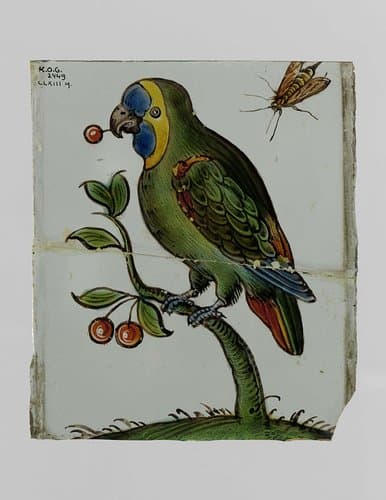
**BK-CLXIII-Q** *Anonymous, 1700–1800* *Grisaille paint on glass with leading, 11.1 × 9.4 cm* This delicate anonymous work, titled BK-CLXIII-Q, exemplifies 18th-century European grisaille painting on glass—a technique where monochromatic grays create a sculptural illusion, painted in reverse on the back of the glass for a luminous, jewel-like glow when viewed from the front. The "leading" refers to thin lead strips traditionally used to frame and assemble glass panels, suggesting this small piece (just larger than a credit card) may have been part of a larger window, a devotional plaque, or a decorative insert for furniture or a curiosity cabinet. Dating to the 1700s, grisaille on glass flourished in the Low Countries and Germany, blending painting with glasscraft traditions from medieval stained glass. Artists applied fine layers of gray-toned pigments to mimic marble reliefs or cameos, a trompe l'oeil effect that played with light and depth. Its compact size hints at private, intimate use—perhaps in a bourgeois home—reflecting the era's fascination with optical illusions and miniature arts amid the Enlightenment's scientific curiosity. Though the exact subject remains undocumented, this piece highlights the anonymous craftsmanship of specialized ateliers, preserving a fragile fusion of technique and transparency that captivates with its subtlety and enduring sheen. A quiet gem of vernacular art!
About the Artist
anonymous
In the vast tapestry of art history, "Anonymous" stands not as a singular individual but as a collective designation for countless unidentified creators whose works have endured across millennia. These artists, spanning prehistoric cave painters to medieval illuminators and folk craftsmen, produced the foundational layers of human visual culture. Prior to the Renaissance, when individual fame emer...