
Rum Characters in a Shrubbery
November 1, 1808
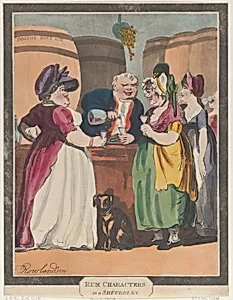
Medium
Hand-colored etching and aquatint
Dimensions
Sheet: 12 11/16 × 9 3/4 in. (32.3 × 24.7 cm)
Classification
Prints
Department
Drawings and Prints
Museum
Metropolitan Museum of Art, New York, NY
Credit
The Elisha Whittelsey Collection, The Elisha Whittelsey Fund, 1959
Accession Number
59.533.1197
Rights
Public Domain
Tags
Art Historical Context
Step into the whimsical yet wicked world of Thomas Rowlandson'sRum Characters in a Shbery* (November 1, 1808), a hand etching and aquatint captures the artist's signature satirical flair. Rowlandson, a leading British caricaturist of the Regency era, delighted audiences with his sharp-eyed depictions of human folly. Here, eccentric figures—men, women, and even dogs—cavort amid overgrown shrubbery, indulging in boozy revelry that pokes fun at excessive drinking and social pretensions. The medium shines through Rowlandson's mastery: etching provides crisp lines for exaggerated features, while aquatint adds tonal depth, and meticulous hand-coloring infuses vibrant hues, making the chaos pop on the page (12 11/16 × 9 3/4 in.). Produced during a time of rapid urbanization and moral debates in early 19th-century Britain, such prints were affordable entertainments sold in London shops, offering biting commentary on everyday vices. Housed in the Metropolitan Museum of Art's Drawings and Prints department (The Elisha Whittelsey Collection, 1959), this work exemplifies Rowlandson's enduring cultural impact—blending humor with critique to mirror society's "rum" underbelly. A perfect glimpse into Georgian wit!
About the Artist
Thomas Rowlandson · 1756–1827
Thomas Rowlandson (1757–1827) was an English artist and caricaturist whose satirical watercolors and prints captured the social life of Georgian Britain with unparalleled wit and technical mastery. Alongside James Gillray, he is recognized as one of the greatest British graphic artists, and his distinctive flowing line and keen observations have made his work integral to understanding late 18th an...