
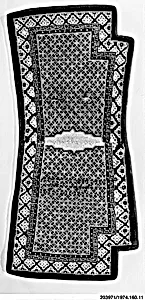
Saddle Rug
Unknown Artist
19th century
Medium
Foundation: cotton; wool knotting
Dimensions
52 x 23 1/2 in. (132.08 x 59.69 cm)
Classification
Textiles-Rugs
Culture & Period
China · Qing dynasty (1644–1911)
Department
Asian Art
Museum
Metropolitan Museum of Art, New York, NY
Credit
Bequest of Joseph V. McMullan, 1973
Accession Number
1974.160.11
Rights
Public Domain
Art Historical Context
Step into the vibrant world of Qing dynasty China (1644–1) with this exquisiteSaddle Rug*, a 19th-century textile masterpiece the Metropolitan Museum of Art's Asian Art collection. Measuring 52 x 23½ inches, its compact size was perfectly suited for draping over a horse's saddle, transforming a utilitarian ride into a display of elegance and status. During the Qing era, horseback riding remained a symbol of imperial power and elite leisure, even as the dynasty embraced innovative crafts influenced by Manchu and Han traditions. Crafted with a cotton foundation and intricate wool knotting—a technique akin to traditional knotted-pile weaving—this rug exemplifies the technical prowess of Chinese textile artisans. The wool provided rich, durable color and texture, while the cotton base ensured flexibility for saddle use. These rugs often featured bold motifs like dragons, florals, or auspicious symbols, blending functionality with artistry to ward off evil and attract prosperity. Bequeathed by Joseph V. McMullan in 1973, this anonymous gem offers a window into everyday luxury among China's upper classes, highlighting the Qing's legacy in textiles as both practical art and cultural emblem. A true rider's treasure!