
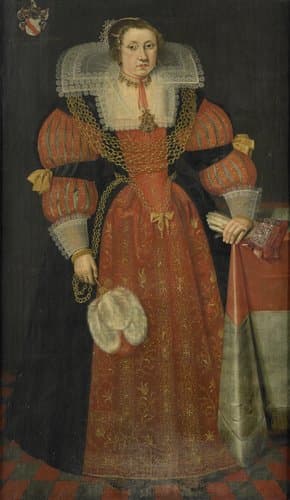
Saepke of Sophia van Vervou
1630
Medium
oil on canvas
Dimensions
102.5; 131; 203; 102.5; 174.5; 174
Rights
Public Domain
About this artwork
? Martenahuis, Franeker; from the Municipality of Franekerdeel to the museum, 1913; on loan to the Martenahuis, Franeker, since 1913
Art Historical Context
"Saepke of Sophia Vervou" is a oil on canvas portrait painted 1630 by L.J. Woutersin, measuring an impressive 174 cm in height by 102.5 cm in width. This large-scale work, typical of Dutch Golden Age portraiture, the elegance of its subject—likely a woman from the Frisian region, given the evocative name evoking local nobility or prominence. Oil on canvas was the preferred medium of the era, allowing artists to achieve rich textures, luminous tones, and intricate details in clothing and settings that conveyed social status. Created during the Dutch Republic's prosperous Golden Age, the painting reflects the era's fascination with individual likenesses, where portraits served as markers of identity, wealth, and legacy. Woutersin's work hails from Franeker in Friesland, a hub of intellectual and cultural life, home to the renowned Martenahuis. Its provenance traces from the Martenahuis to the Municipality of Franekeradeel, which gifted it to the Rijksmuseum in 1913; it has remained on long-term loan to the Martenahuis ever since, preserving its ties to Frisian heritage. Today, housed primarily at the Rijksmuseum but cherished in Franeker, this portrait offers a window into 17th-century Dutch provincial life, blending artistic skill with regional pride. Visitors to the Martenahuis can appreciate how such works immortalized everyday elites amid Holland's artistic boom.