
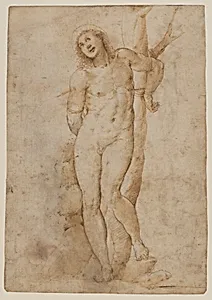
Saint Sebastian (recto); sketches of a male head and a standing figure in a short cape; a copy of the figure on the recto (verso)
early–mid-16th century
Medium
Pen and brown ink, brown wash, over black chalk (recto); pen and brown ink, black chalk (verso)
Dimensions
10 3/8 x 7 1/4 in. (26.4 x 18.4 cm)
Classification
Drawings
Department
Robert Lehman Collection
Museum
Metropolitan Museum of Art, New York, NY
Credit
Robert Lehman Collection, 1975
Accession Number
1975.1.421
Rights
Public Domain
Tags
Art Historical Context
This exquisite drawing by Sodoma (Giovanni Antonio Bazzi), Sienese artist of the early 16th century, captures the iconic martyr Saint Sebastian on theo. Bound and pierced by arrows in a classic pose of suffering and resilience, the figure exemplifies the Renaissance fascination with idealized anatomy and emotional intensity. Sodoma, influenced by Leonardo da Vinci during his time in Milan, blended graceful Mannerist lines with dramatic chiaroscuro, making this a preparatory study likely for a larger painting or fresco. The verso reveals the artist's iterative process: quick sketches of a male head, a standing figure in a short cape, and a copy of the recto Saint Sebastian. Executed in pen and brown ink with brown wash over black chalk on the recto, and pen with black chalk on the verso, these techniques allowed for fluid modeling and tonal depth on a modest sheet of 10 3/8 x 7 1/4 inches. Such versatile media were prized in the 16th century for their portability and expressiveness. Housed in the Metropolitan Museum of Art's Robert Lehman Collection since 1975, this double-sided work highlights Sodoma's innovative draftsmanship amid Siena's vibrant artistic scene, offering visitors a glimpse into the creative mindset behind Renaissance religious iconography. Saint Sebastian's enduring image as a symbol of faith under trial adds layers of cultural resonance.