
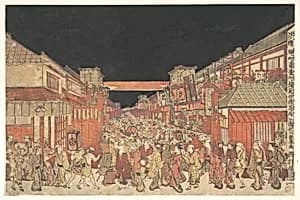
Sakaichō Fukiyachō Kaomise Yoshibai no Zu
ca. 1780
Medium
Woodblock print; ink and color on paper
Dimensions
H. 9 13/16 in. (24.9 cm); W. 14 3/4 in. (37.5 cm)
Classification
Prints
Culture & Period
Japan · Edo period (1615–1868)
Department
Asian Art
Museum
Metropolitan Museum of Art, New York, NY
Credit
Rogers Fund, 1922
Accession Number
JP1420
Rights
Public Domain
Tags
Art Historical Context
This vibrant woodblock print by Utagawa Toyoharu captures the lively energy of Edo-period Japan around 1780. Created during the height of the ukiyo-e tradition, the work depicts bustling streets and crowds in the Sakaichō and Fukiyachō theater districts of Edo (modern-day Tokyo). The title refers to a “kaomise” event, a festive occasion when kabuki actors appeared before audiences to mark the new theatrical season, highlighting the central role of popular entertainment in urban life. Toyoharu, founder of the influential Utagawa school, helped pioneer perspective techniques in Japanese prints, blending Western-inspired depth with traditional flat color areas. Printed with ink and color on paper, this medium allowed affordable dissemination of images to a wide audience, reflecting the growing merchant class’s interest in contemporary scenes. Measuring just under ten by fifteen inches, the composition draws viewers into the dynamic flow of people, evoking the excitement of city streets. As part of the Metropolitan Museum’s Asian Art collection, the print offers a window into Edo’s cultural vibrancy and the artistic innovations that shaped later generations of ukiyo-e masters.
About the Artist
Utagawa Toyoharu · 1735–1814
Utagawa Toyoharu (1735–1814) holds a foundational place in the history of Japanese printmaking as the founder of the prolific and long-lived Utagawa school, which would go on to produce some of the most celebrated names in ukiyo-e, including Hiroshige and Kuniyoshi. Born in what is now Hyogo Prefecture, Toyoharu moved to Edo, where he studied under Toriyama Sekien and later explored the Kano schoo...