
Sake Cup with Scenes from the Noh Plays Pine in the Winds, Yōrō Falls, and The Tengu of Mount Kurama
19th century
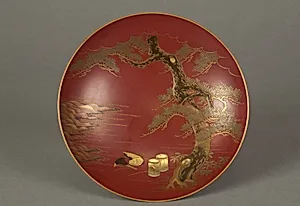
Medium
Gold lacquer on red lacquer ground
Dimensions
H. 1 in. (2.5 cm); W. 4 3/8 in. (11.1 cm)
Classification
Lacquer
Culture & Period
Japan · Edo period (1615–1868)
Department
Asian Art
Museum
Metropolitan Museum of Art, New York, NY
Credit
Bequest of Stephen Whitney Phoenix, 1881
Accession Number
81.1.569
Rights
Public Domain
Tags
Art Historical Context
This delicate sake cup, crafted by the lacquer artist Shomosai the 19th century Japan's Edo period (16151868), exemplifies the's mastery of urushi lacquerware. Measuring just 1 inch high and 4⅜ inches wide, its petite form was designed for intimate gatherings, where sake was savored amid refined conversation. The vibrant red ground, overlaid with intricate gold lacquer designs, highlights the technical virtuosity of maki-e techniques—gold powder sprinkled and burnished onto layers of lacquer for a luminous, durable finish that withstands time and use. Adorning the cup are vivid scenes from three celebrated Noh plays: *Pine in the Winds*, *Yōrō Falls*, and *The Tengu of Mount Kurama*. Noh, Japan's classical masked theater form dating back to the 14th century, blends poetry, music, and dance to evoke supernatural tales and natural wonders—pines symbolizing endurance, cascading falls representing impermanence, and tengu (mythical bird-like spirits) embodying mountain mysticism. Trees, a recurring motif, underscore themes of nature's timeless presence in Japanese aesthetics. As a bequest to the Metropolitan Museum of Art in 1881, this piece reflects Edo Japan's cultural flourishing, when lacquerware became a coveted art for the elite, merging functionality with profound storytelling. Visitors, imagine toasting with it under lantern light!