
Salver
Unknown Artist
19th century
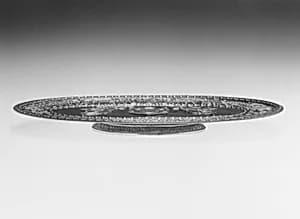
Medium
Silver gilt
Dimensions
Overall: 7/8 × 9 11/16 × 5 3/4 in. (2.2 × 24.6 × 14.6 cm)
Classification
Metalwork-Silver
Culture
probably French
Department
European Sculpture and Decorative Arts
Museum
Metropolitan Museum of Art, New York, NY
Credit
Gift of Mrs. C. Ruxton Love Jr., 1978
Accession Number
1978.524.4
Rights
Public Domain
Art Historical Context
This elegant 19th-century salver, likely of French origin, exemplifies the refined metalwork traditions of European decorative arts.ed in silver gilt—a luxurious technique where a thin layer of gold is applied over silver for a radiant, durable finish—it measures a modest 7/8 × 9 11/16 × 5 3/4 inches, making it perfectly suited for serving delicate items like tea cups or correspondence in affluent households. Its presence in the Metropolitan Museum of Art's European Sculpture andative Arts Department, gifted by Mrs. C. Ruxton Love Jr. in1978, highlights its status as a cherished example of silversmithing craftsmanship. Salvers like this one were status symbols during the 19th century, bridging the opulent styles of the Napoleonic era and the emerging elegance of the Belle Époque. In French culture, they graced dining tables and salons, symbolizing hospitality and wealth amid the period's industrial advancements in metalworking. The unknown artist's mastery of gilding techniques ensured both aesthetic brilliance and practical shine, resisting tarnish while evoking the grandeur of royal courts. Today, this salver invites us to appreciate the everyday artistry of the past—where even a simple tray embodied sophistication and cultural refinement.