
Sampler
Unknown Artist
ca. 1825
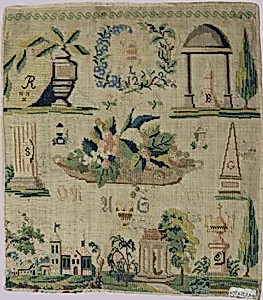
Medium
Silk and linen on canvas
Dimensions
H. 10 3/4 x W. 9 3/4 inches (27.3 x 24.8 cm)
Classification
Textiles-Embroidered
Culture
German
Department
European Sculpture and Decorative Arts
Museum
Metropolitan Museum of Art, New York, NY
Credit
Rogers Fund, 1909
Accession Number
09.50.3314
Rights
Public Domain
Art Historical Context
This delicate sampler, created by an unknown German artist around 1825, the embroidered textiles that were a cornerstone of young women's education in early 19th-century Europe Measuring just 10¾ by 9¾ inches, it was crafted from vibrant silk and sturdy linen threads worked onto a canvas ground—a practical medium that allowed for precise stitching and longevity. Samplers like this served as personal skill demonstrations, often featuring alphabets, motifs, and patterns to showcase proficiency in needlework, a vital domestic art form. In German culture of the Biedermeier era, such pieces reflected the era's emphasis on orderly home life and moral instruction, blending utility with subtle artistry. The use of silk provided lustrous color and texture, highlighting techniques like cross-stitch or satin stitch, which demanded patience and precision. Acquired through the Rogers Fund in 1909, this sampler now resides in The Metropolitan Museum of Art's Department of European Sculpture and Decorative Arts, offering a tangible glimpse into everyday creativity. Today, it reminds us of the unsung talents of anonymous makers, preserving a thread of history in every stitch.