
Sampler
Unknown Artist
1801
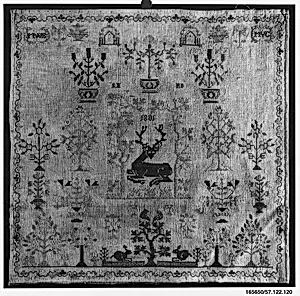
Medium
Silk on cotton
Dimensions
18 × 18 in. (45.7 × 45.7 cm)
Classification
Textiles-Embroidered
Culture
Dutch
Department
European Sculpture and Decorative Arts
Museum
Metropolitan Museum of Art, New York, NY
Credit
From the Collection of Mrs. Lathrop Colgate Harper, Bequest of Mabel Herbert Harper, 1957
Accession Number
57.122.120
Rights
Public Domain
Tags
Art Historical Context
This charming 1801 Dutch sampler, crafted by an unknown artist with silk threads on cotton, exemplifies the educational needlework traditions of early 19th-century Europe Measuring a neat 18 × 18 inches, it belongs to the Metropolitan Museum of Art's European Sculpture and Decorative Arts collection, gifted through the bequest of Mabel Herbert in 1957. Samplers like this were typically stitched by young girls—often between ages 8 and 14—as both a practical lesson in embroidery skills and a showcase of their accomplishments, blending utility with artistic expression. The square composition features delicate motifs of deer gracefully amid blooming flowers, rendered in fine silk stitches that highlight the embroiderer's precision and creativity. Common in Dutch households, these textiles drew from folk art patterns, symbolizing nature's abundance and domestic virtue. Techniques such as satin, chain, and stem stitches would have been mastered here, creating vibrant, textured designs that endured as family heirlooms or dowry pieces. Today, this sampler offers a window into everyday life in the Netherlands during the Napoleonic era, when such crafts preserved cultural identity amid political change. Its preservation celebrates the often-overlooked artistry of women in decorative arts.