
Sampler
Unknown Artist
1801
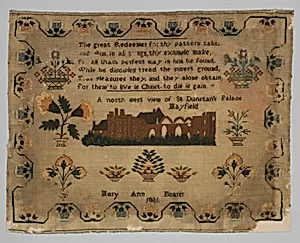
Medium
Silk on wool canvas
Dimensions
H. 13 1/4 x W. 17 1/4 inches (33.7 x 43.8 cm)
Classification
Textiles-Embroidered
Culture
British
Department
European Sculpture and Decorative Arts
Museum
Metropolitan Museum of Art, New York, NY
Credit
From the Collection of Mrs. Lathrop Colgate Harper, Bequest of Mabel Herbert Harper, 1957
Accession Number
57.122.564
Rights
Public Domain
Tags
Art Historical Context
This exquisite silk-on-wool sampler, created in Britain in 1801, exemplifies the educational needlework traditions of the early 19th century Samplers like this were typically crafted by young girls as both a display of embroidery skills and a practical lesson in domestic arts. At 13¼ x 17¼ inches, its modest scale made it ideal for a maker's hands, while the wool canvas provided a sturdy ground for the vibrant silk threads, allowing for intricate stitching techniques such as satin, chain, and cross stitches that ensured durability and visual appeal. The design features delicate motifs of buildings and flowers, common in British samplers of the period. These elements often symbolized prosperity, nature's beauty, and architectural stability, reflecting the cultural values of hearth and home. Flowers might represent virtues like fidelity or abundance, while buildings could evoke local landmarks or aspirational estates, blending personal expression with standardized patterns passed down through families or schools. Housed in the Metropolitan Museum of Art's Department of European Sculpture and Decorative Arts, this piece from the bequest of Mabel Herbert Harper in 1957 offers a window into everyday creativity. It highlights how embroidery bridged art and utility, preserving women's voices in a male-dominated art world and delighting us today with its timeless charm.