
Sampler
Unknown Artist
19th century
Medium
Cotton; embroidered in silk
Dimensions
H. 18 5/8 in. (47.3 cm) W. 12 1/2 in. (31.8 cm)
Classification
Textiles-Embroidered
Department
Islamic Art
Museum
Metropolitan Museum of Art, New York, NY
Credit
From the Collection of Mrs. Lathrop Colgate Harper, Bequest of Mabel Herbert Harper, 1957
Accession Number
57.122.63
Rights
Public Domain
Art Historical Context
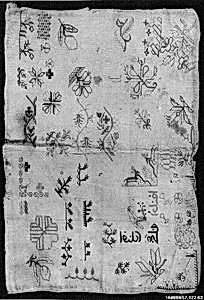
This exquisite 19th-century sampler crafted from cotton embroidered with vibrant silk threads, measures 18⅝ × 12½ inches (47.3 × 31.8 cm). Housed in the Metropolitan Museum of Art's Islamic Department, it exemplifies the intricate textile traditions of the Islamic world. Samplers like this served as personal practice pieces, allowing makers—often skilled women—to master a repertoire of stitches and patterns, blending utility with artistic expression. In the 19th century embroidery was a cornerstone of Islamic material culture, adorning garments, household textiles, and ceremonial items across regions from the Ottoman Empire to Persia and North Africa. The use of lustrous silk on sturdy cotton highlights the technical sophistication of these works, where fine needlework conveyed cultural motifs, perhaps geometric designs or floral elements symbolic of paradise gardens in Islamic art. Such pieces were not mere exercises but testaments to generational knowledge passed down in domestic settings. Generously bequeathed in 1957 by Mabel Herbert Harper from the collection of Mrs. Lathrop Colgate Harper, this anonymous artwork invites us to appreciate the unsung artistry of Islamic embroiderers, whose delicate precision continues to captivate modern viewers.