
Sampler
19th century
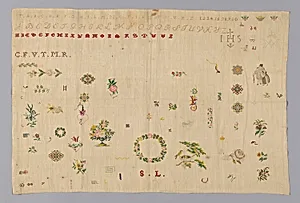
Medium
Linen, plain weave; embroidered with silk
Dimensions
68.6 × 45.8 cm (27 × 18 in.)
Classification
textile
Department
Textiles
Museum
Art Institute of Chicago
Accession Number
54860
Rights
Public Domain
Art Historical Context
This exquisite 19th-century Sampler crafted from linen plain weave and meticulously embroidered with silk threads, measures 68.6 × 45.8 cm and hails from the Art Institute of Chicago's Textiles. Samplers like this were hallmark pieces of domestic needlework, often created by young girls as both educational exercises and personal achievements. The plain weave linen provided a sturdy, even ground ideal for precise stitching, while vibrant silk threads allowed for colorful, durable motifs—typically alphabets, numbers, borders, and symbolic designs that showcased emerging sewing skills. In the 19th century, amid the rise of formalized girls' education in Europe and America, samplers held profound cultural significance. They served as "visual resumes," demonstrating proficiency in embroidery techniques like cross-stitch, satin stitch, and eyelet, while sometimes incorporating family mottos, religious verses, or local flora and fauna. This anonymous work reflects the era's emphasis on virtuous homemaking, preserving traditions passed down through generations. Today, such textiles are treasured in museum collections for their folk art value, offering intimate glimpses into everyday life and women's creativity. Though the maker remains unknown, this Sampler stands as a testament to the artistry hidden in the domestic sphere, inviting us to appreciate the patience and skill behind every thread.
About the Artist
Unknown
The artist designated as "Unknown" in our virtual museum's collection exemplifies a poignant chapter in art history: creators whose identities have faded into obscurity despite the enduring power of their work. With only one known artwork attributed to them in our holdings, this figure represents countless anonymous hands that shaped visual culture across centuries. Museums worldwide, including th...