
Sanbantsuzuki
c. 1824
Medium
nishikie, with metallic pigments
Dimensions
209; 183
Rights
Public Domain
About this artwork
Legaat van J.A. Bierens de Haan, Amsterdam
Art Historical Context
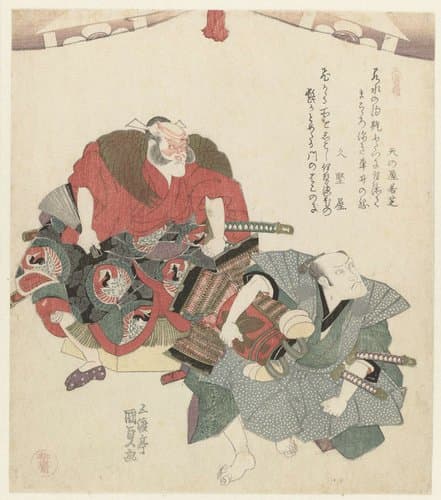
**Sanbantsuzuki** is a captivating woodblock print by Utagawa Kunisada (I) (1786–1865), one of the most prolific masters of Japan's ukiyo-e tradition, created around 1824 during the late Edo period. Kunisada, a key figure in the Utagawa school, excelled in depicting the "floating world" of theater, beauty, and everyday elegance, producing thousands of works that captured the vibrancy of urban life in Edo (modern Tokyo). This print, measuring a compact 209 × 183 mm, exemplifies his early style, blending precise draftsmanship with dynamic compositions that brought kabuki actors, courtesans, and scenes of leisure to life for a wide audience. Rendered in *nishikie*—or "brocade prints"—the artwork showcases the revolutionary technique of multi-block color printing, where separate woodblocks for each hue allowed for stunningly vivid palettes. Kunisada's use of metallic pigments, such as gold or silver, adds a luxurious shimmer, elevating the print from mere illustration to a jewel-like object that mimicked the opulence of textiles and theater costumes. This innovation made ukiyo-e accessible yet aspirational, democratizing high art for merchants and commoners alike. Acquired through the bequest of J.A. Bierens de Haan in Amsterdam, *Sanbantsuzuki* highlights the global reach of Japanese prints, which captivated European collectors in the 19th century and influenced Impressionists like Monet. A gem of cultural exchange, it invites us to savor the fleeting beauty of Edo's world. (198 words)