
Saucer
Unknown Artist
ca. 1795
Medium
Hard-paste porcelain
Dimensions
Diameter: 5 9/16 in. (14.1 cm)
Classification
Ceramics-Porcelain-Export
Culture
Chinese, for Dutch market
Department
European Sculpture and Decorative Arts
Museum
Metropolitan Museum of Art, New York, NY
Credit
Helena Woolworth McCann Collection, Gift of Winfield Foundation, 1951
Accession Number
51.86.374
Rights
Public Domain
Tags
Art Historical Context
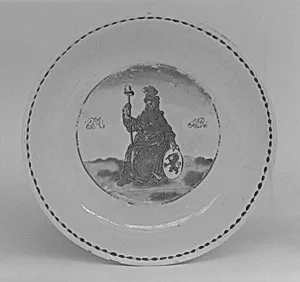
This elegant saucer, crafted around 1795 in China specifically for the Dutch market, exemplifies the booming export porcelain trade of the late 18th century. Measuring just 5 9/16 inches in diameter, it was produced using hard-paste porcelain—a high-fired, translucent material perfected by Chinese artisans centuries earlier. This medium's durability and fine white body made it highly prized in Europe, where it fueled a craze for luxurious tableware amid expanding global commerce through entities like the Dutch East India Company. The saucer's decoration, featuring motifs of women and coats of arms, reflects a fascinating cultural fusion. Chinese potters tailored these pieces to European clients, incorporating heraldic designs that personalized them for wealthy Dutch families. Such armorial porcelain symbolized status and sophistication, blending Eastern technical mastery with Western iconography in vibrant overglaze enamels. Housed in the Metropolitan Museum of Art's European Sculpture and Decorative Arts department as part of the Helena Woolworth McCann Collection, this saucer offers a window into 18th-century Sino-European exchange, highlighting how everyday objects became vessels of cross-cultural prestige.