
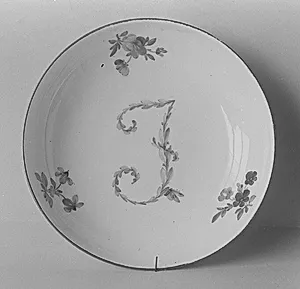
Saucer (part of a set)
Medium
Hard-paste porcelain
Dimensions
Diameter: 5 1/8 in. (13 cm)
Classification
Ceramics-Porcelain
Culture
German, Berlin
Department
European Sculpture and Decorative Arts
Museum
Metropolitan Museum of Art, New York, NY
Credit
Joint Bequest of Harriet K. and Grace Wilkes, 1922
Accession Number
22.45.29
Rights
Public Domain
Art Historical Context
This delicate saucer, part of a luxurious set produced by the Royal Porcelainufactory in Berlin around 1765, exemplifies pinnacle of 18th-century European porcelain. Measuring just 5⅛ inches in diameter, was crafted from hard-paste porcelain—a material developed in Germany that combined kaolin clay and feldspathic rock, fired at high temperatures to achieve exceptional translucency, strength, and a pure white body. This technique, pioneered by nearby Meissen and perfected at Berlin's state-sponsored factory founded in 1763 by Frederick the Great, allowed for intricate molding and decoration rivaling Chinese imports. The Royal Berlin Manufactory quickly rose to prominence, supplying elegant tableware to European courts and nobility during the Rococo era's love affair with ornate domestic luxury. Such saucers were essential components of tea or coffee services, symbols of refinement and hospitality in Prussian high society. Their subtle forms invited painted motifs, gilding, or pierced edges, blending functionality with artistry. Today, housed in The Metropolitan Museum of Art thanks to the 1922 bequest of Harriet K. and Grace Wilkes, this piece invites us to savor the era's blend of innovation and elegance—porcelain as both everyday indulgence and royal prestige.