
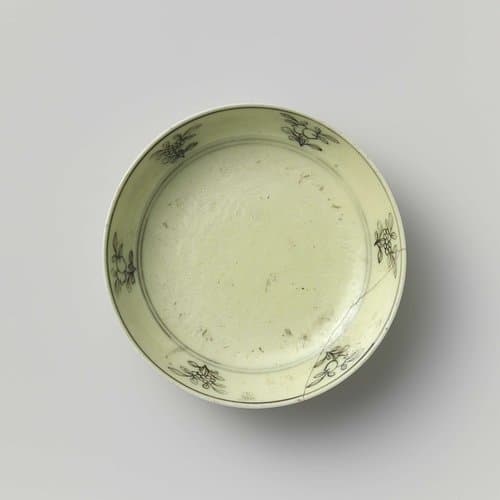
Saucer with pearl chasing dragons and flowering plants
c. 1875 - c. 1908
Medium
turning
Dimensions
2.8; 6.7; 10.6
Rights
Public Domain
About this artwork
porselein met glazuur
Art Historical Context
This delicate saucer, titled *Saucer with Pearl-Chasing Dragons and Flowering Plants*, late 19th-century porcelain craftsmanship from an anonymous artist, likely working in China during the waning years of the Qing dynasty (. 1875–1908). Measuring just 2.8 cm high and 10.6 cm in diameter, it was meticulously shaped using the turning technique—thrown and refined on a potter's wheel its smooth, precise form. The body is fine porcelain coated with a glossy glaze ("porselen met glazuur" in Dutch), a hallmark of traditional East Asian ceramics that enhances both durability and vibrancy. The saucer's surface bursts with dynamic motifs: fierce dragons playfully chasing flaming pearls amid lush flowering plants. In Chinese culture, dragons symbolize imperial power, good fortune, and protection, while the pearl represents wisdom and prosperity. Flowering motifs, often peonies or lotuses, evoke abundance and harmony with nature. These designs, probably painted in overglaze enamels, reflect enduring decorative traditions from Jingdezhen kilns, blending symbolism with exquisite artistry. As a small, functional yet ornate object, this saucer highlights the Qing era's porcelain export boom, gracing tea tables worldwide. Its anonymity underscores the collaborative genius of imperial workshops, where skilled artisans preserved centuries-old techniques amid political upheaval, offering visitors a tangible link to Asia's rich ceramic heritage.
About the Artist
anonymous
In the vast tapestry of art history, "Anonymous" stands not as a singular individual but as a collective designation for countless unidentified creators whose works have endured across millennia. These artists, spanning prehistoric cave painters to medieval illuminators and folk craftsmen, produced the foundational layers of human visual culture. Prior to the Renaissance, when individual fame emer...