
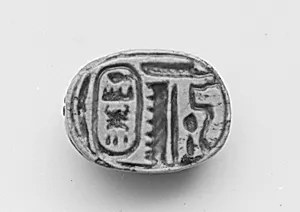
Scarab
Unknown Artist
ca. 1400–1390 B.C.
Medium
Glazed steatite
Classification
Scarab, Thutmose IV
Period
New Kingdom
Department
Egyptian Art
Museum
Metropolitan Museum of Art, New York, NY
Credit
Gift of J. Pierpont Morgan, 1917
Accession Number
17.190.1982
Rights
Public Domain
Tags
Art Historical Context
This exquisite scarab, crafted around 1400–139 B.C. during Egypt’s New and Dynasty 18, the enduring artistry of ancient amulet-making. Carved from steatite—a soft stone prized for its carvability—and coated with a vibrant glaze, the piece would gleamed like polished turquoise or blue faience. Such scarabs served both practical and symbolic roles, often functioning as seals while embodying profound spiritual meaning. In ancient Egyptian culture, the scarab beetle represented rebirth and the sun’s daily renewal, linking the insect’s habit of rolling dung balls to the god Ra’s journey across the sky. The hieroglyphs inscribed on its base likely conveyed protective spells, royal names, or personal messages, transforming the object into a potent talisman for its owner in life and the afterlife. As a gift to the Metropolitan Museum, this Dynasty 18 scarab offers visitors a tangible connection to one of Egypt’s most prosperous eras, highlighting how even small objects blended exquisite craftsmanship with deep cultural resonance.