
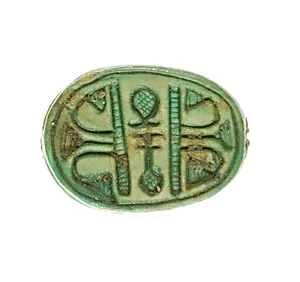
Scarab Inscribed with Plant Motifs and Hieroglyphs
Unknown Artist
ca. 1479–1458 B.C.
Medium
Steatite (glazed)
Dimensions
L. 1.7 cm (11/16 in); w. 1.1 cm (7/16 in); h. 0.7 cm (1/4 in)
Classification
Scarab; papyrus/lotus, hieroglyphs; notched back
Period
New Kingdom
Department
Egyptian Art
Museum
Metropolitan Museum of Art, New York, NY
Credit
Rogers Fund, 1927
Accession Number
27.3.369
Rights
Public Domain
Tags
Art Historical Context
This exquisite scarab, carved from glazed steatite during Egypt's New Kingdom (Dynasty 18, ca. 1479–1458 B.C.), exemplifies the ancient Egyptians' mastery of miniature artistry. Measuring just 1.7 cm long, it was likely used as an amulet, seal, piece of jewelry, reflecting the era's reverence for the scarab beetle—a symbol of the sun god Khepri and rebirth. Produced under pharaohs like Thutmose III, such objects were ubiquitous in daily life and elite burials, blending functionality with profound spiritual meaning. The scarab's surface features intricate plant motifs and hieroglyphs, incised with remarkable precision on its compact form. Steatite, a soft soapstone, was ideal for detailed carving and glazing, often fired to a vibrant turquoise hue that evoked precious lapis lazuli. This glazing technique not only enhanced durability and beauty but also protected magical inscriptions believed to ward off evil or invoke fertility and renewal—themes echoed in the floral designs symbolizing growth. Acquired by The Metropolitan Museum of Art through the Rogers Fund in 1927, this artifact offers a window into New Kingdom innovation, where everyday items became talismans of eternity. Visitors, imagine slipping it into your palm— a tiny portal to pharaonic magic!