
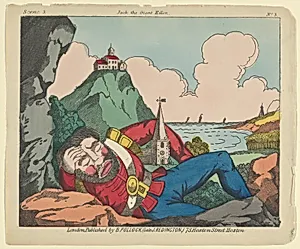
Scene 3, from Jack and the Giant Killer, Scenes for a Toy Theater
1870–90
Medium
Lithograph
Dimensions
Sheet: 6 11/16 × 8 7/16 in. (17 × 21.4 cm)
Classification
Prints
Department
Drawings and Prints
Museum
Metropolitan Museum of Art, New York, NY
Credit
The Elisha Whittelsey Collection, The Elisha Whittelsey Fund, 1952
Accession Number
52.541.1(11)
Rights
Public Domain
Tags
Art Historical Context
Step into the enchanting world of Victorian toy theaters with *Scene 3, from and the Giant Killer, for a Toy Theater* Benjamin Pollock, created between 1870 and 1890. This lithograph, measuring just 6 11/16 × 8 7/16 inches, captures a dramatic moment from the classic English fairy tale, likely featuring bold male figures (as suggested by its tags) locked in adventure against a giant foe. Pollock, a renowned London publisher, specialized in these affordable paper theaters, transforming popular stories into playable sets for children. Toy theaters flourished in 19th-century Britain as a magical pastime, allowing families to stage miniature productions at home with cut-out characters, scenery, and scripts. Pollock's sheets, printed via lithography—a technique that enabled vibrant colors and fine details on inexpensive paper—made theater accessible beyond grand stages. This medium's precision suited the intricate designs needed for assembly, sparking creativity and imagination in young audiences. Housed in the Metropolitan Museum of Art's Drawings and Prints department, thanks to The Elisha Whittelsey Collection, this piece highlights the cultural role of folklore in education and entertainment. It reminds us how everyday art preserved timeless tales like Jack's heroic quest, bridging play and performance in an era before cinema.