
Sceptre
Unknown Artist
18th century
Medium
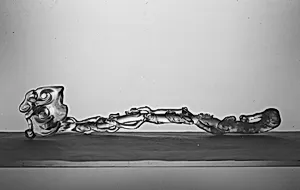
Rock crystal
Dimensions
L. 15 in. (38.1 cm)
Classification
Hardstone
Culture
China
Department
Asian Art
Museum
Metropolitan Museum of Art, New York, NY
Credit
Gift of Heber R. Bishop, 1902
Accession Number
02.18.822
Rights
Public Domain
Art Historical Context
Behold the elegant *Sceptre*, a 18th-century Chinese carved from translucent rock crystal, a prized hardstone revered for its clarity and durability. Measuring 15 inches (38.1 cm) in length, this ceremonial object exemplifies the Qing dynasty's opulent craftsmanship, likely intended as a *ruyi*—a scepter symbolizing power, longevity, and fulfilled wishes. Its smooth, curved form would have caught the light beautifully, evoking clouds and auspicious omens in imperial courts. Rock crystal, a form of quartz, demanded exceptional skill to carve due to its hardness, rivaling jade in prestige among Chinese elites. Artisans employed intricate techniques like hollowing and polishing to enhance its luminous quality, making it a status symbol for scholars, officials, or emperors. Such sceptres were often presented as diplomatic gifts or ritual items, blending artistry with profound cultural symbolism. Generously donated to the Metropolitan Museum of Art in 1902 by Heber R. Bishop, this anonymous masterpiece invites us to ponder the refined tastes of China's golden age, where beauty served both aesthetic delight and spiritual purpose. A true gem of Asian Art!