
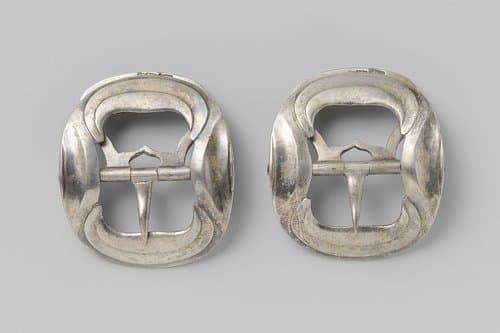
Schoengesp van zilver met ondulerende decoratie in reliëf
c. 1763
Medium
forging
Dimensions
6.1; 1.5; 6.7
Rights
Public Domain
About this artwork
stadskeur, op scharnierend deel van de gesp, geslagen: drie kronen boven elkaar
Art Historical Context
Step into the elegant world of 18th fashion with this exquisite silver shoe buckle, crafted around 1763 in Amsterdam, Netherlands. Measuring a dainty 6.1 cm high, 6.7 cm wide, and 1.5 cm deep, this anonymous work exemplifies the refined accessories worn by the European elite during the Rococo era. Shoe buckles like this one were essential for securing footwear, often serving as subtle displays of wealth and taste amid the opulent styles of the time. The buckle's surface features undulating, wavy decoration in low relief, achieved through skilled forging techniques that involved hammering silver into intricate patterns. This method allowed artisans to create fluid, organic motifs reminiscent of Rococo's playful asymmetry—think swirling shells and scrolls evoking nature's curves. A key detail is the struck city mark on the hinged section: three crowns stacked vertically, the proud emblem of Amsterdam's guild silversmiths, certifying its authenticity and origin from one of Europe's bustling silver centers. Culturally, such buckles highlight the intersection of craftsmanship and daily luxury in the Age of Enlightenment. Worn by men and women alike, they fastened ornate shoes at courtly events or urban strolls, blending functionality with artistry. This piece invites us to appreciate the unsung heroes of fashion history—anonymous makers whose precision endures centuries later.
About the Artist
anonymous
In the vast tapestry of art history, "Anonymous" stands not as a singular individual but as a collective designation for countless unidentified creators whose works have endured across millennia. These artists, spanning prehistoric cave painters to medieval illuminators and folk craftsmen, produced the foundational layers of human visual culture. Prior to the Renaissance, when individual fame emer...