
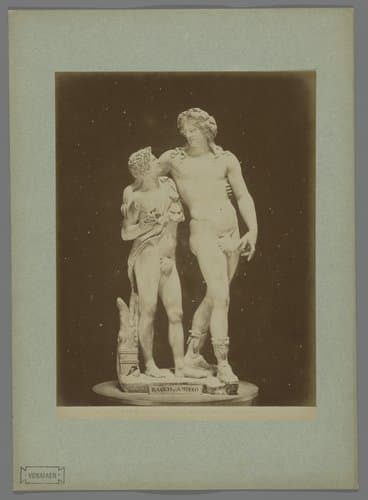
Sculptuur van Bacchus en Ampelos in de Galleria degli Uffizi te Florence
1857 - 1900
Medium
albumen print
Dimensions
259; 355; 255; 192
Rights
Public Domain
About this artwork
foto: hoogte 259 mm x breedte 192 mm
Art Historical Context
This captivating albumen print, titled *Sculptuur van Bacchus Ampelos in de Galleria Uffizi te Florence captures a classical sculpture housed in one of the world's premier art museums, the Uffizi Gallery in. Produced by the renowned Fratelli Alinari photography studio between 1857 1900, it Bacchus—the Roman god of wine, revelry, and ecstasy—alongside his beloved companion Ampelos from Greek mythology. Ampelos a youthful satyr or mortal, met a tragic end, inspiring Bacchus to create the vine, symbolizing themes of love, loss, and the origins of viticulture. The Uffizi's collection of ancient sculptures like this one underscores Florence's Renaissance revival of classical antiquity. Fratelli Alinari, founded in 1852, pioneered fine art photography in Italy, creating meticulous reproductions that brought museum masterpieces to scholars, collectors, and the public worldwide. The albumen print medium, using light-sensitive egg whites on paper, produced rich tonal depth and sharp detail—ideal for documenting intricate marble carvings—at dimensions of 259 mm high by 192 mm wide. This technique dominated 19th-century photography, making high-fidelity images accessible before widespread travel. As a cultural artifact, this print highlights photography's role in democratizing art history, preserving the Uffizi's treasures amid Italy's unification era. Visitors today can appreciate how Alinari's work bridged ancient mythology with modern documentation, inviting us to ponder eternal stories of passion and transformation.