
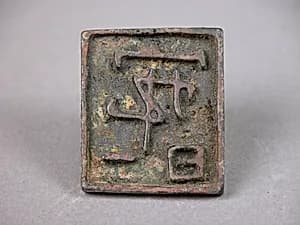
一日寂|Seal
Unknown Artist
Medium
Bronze
Dimensions
H. 1 5/16 in. (3.3 cm); W. 1 1/16 in. (2.7 cm); D. 5/8 in. (1.6 cm)
Classification
Metalwork
Culture & Period
China · Ming dynasty (1368–1644) or earlier
Department
Asian Art
Museum
Metropolitan Museum of Art, New York, NY
Credit
Gift of Edward B. Bruce, 1924
Accession Number
24.13.41
Rights
Public Domain
Art Historical Context
This exquisite bronze seal, titled *一日寂* ("One Day of Solitude"), hails from China and dates to the Ming dynasty (1368–1644) or earlier. Measuring just 1 5/16 inches high, 1 1/16 inches wide, and 5/8 inches deep, its petite scale belies its cultural weight. Crafted in the Asian Art tradition of metalwork, the seal features a carved inscription that evokes poetic introspection—a common motif in Chinese artifacts, blending artistry with personal expression. In ancient and imperial China, seals were essential tools for authentication, much like signatures today. Made from durable bronze, they were stamped with ink onto documents, artwork, or letters, often bearing elegant calligraphy or literary phrases. This example reflects the refined metalworking techniques of the Ming era or preceding dynasties, where artisans achieved intricate detailing through casting and carving. Though the artist remains unknown, such seals highlight the democratization of scholarly culture, used by officials, literati, and collectors alike. Now part of the Metropolitan Museum of Art's collection—thanks to a 1924 gift from Edward B. Bruce—this humble object offers a window into everyday Ming life. Imagine pressing its face into vermilion ink, leaving a lasting mark of quiet contemplation. A testament to China's enduring seal tradition, it invites us to ponder the solitude of a single day across centuries.