
Seal
Unknown Artist
11th century
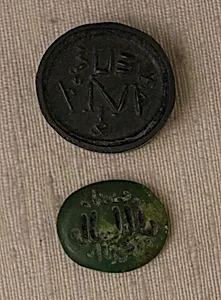
Medium
Possibly ivory; stained green
Dimensions
H. 11/16 in. (1.7 cm) W. 9/16 in. (1.4 cm)
Classification
Seals
Department
Islamic Art
Museum
Metropolitan Museum of Art, New York, NY
Credit
Museum Accession
Accession Number
x.271
Rights
Public Domain
Art Historical Context
This exquisite 11th-century seal from the Islamic Art collection at the Metropolitan Museum of Art the refined craftsmanship of medieval Islamic artisans. Measuring just 11/16 inch high and 9/16 inch wide, its dimin size belies its practical importance. Crafted possibly from ivory and stained a vibrant green—a technique that enhanced durability and aesthetic appeal—this seal would have been used to imprint official marks on documents, parcels, or possessions, serving as a personal signature in an era before widespread literacy. In the bustling Islamic world of the 11th century, during the height of the Abbasid and Fatimid caliphates, seals were essential tools of administration, trade, and diplomacy. They often bore inscriptions with names, titles, or pious phrases, symbolizing authority and authenticity while reflecting the era's sophisticated bureaucracy. Though the artist remains unknown, the object's precision highlights the mastery of miniature carving in Islamic art, where functionality merged seamlessly with elegance. Today, this tiny artifact invites us to ponder the daily lives of medieval Muslims, from merchants sealing trade goods along the Silk Road to officials authenticating decrees. Its green hue, achieved through staining, adds a touch of jewel-like beauty, reminding visitors of the ingenuity behind everyday objects in Islamic culture.