
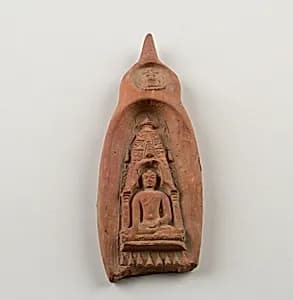
Sealing Depicting the Buddha at the Mahabodhi Temple, Bodhgaya
Unknown Artist
9th century
Medium
Terracotta
Dimensions
H. 7 1/16 in. (18 cm); W. 2 1/2 in. (6.4 cm) D. 13/16 in. (2 cm)
Classification
Sculpture
Culture & Period
India (Bihar) · Pala period
Department
Asian Art
Museum
Metropolitan Museum of Art, New York, NY
Credit
Rogers Fund, 1933
Accession Number
33.50.10
Rights
Public Domain
Tags
Art Historical Context
This terracotta sealing from ninth-century Bihar offers a glimpse into the vibrant Buddhist devotional practices of India’s Pala period. Created in the region surrounding Bodhgaya—the sacred site of the Buddha’s enlightenment—the small plaque depicts the Buddha seated within the Mahabodhi Temple. Pilgrims and artisans of the era frequently produced such portable sealings as votive offerings or souvenirs, allowing devotees to carry a tangible connection to this holy place. Measuring just over seven inches tall, the work exemplifies the Pala period’s mastery of terracotta, a medium favored for its affordability and ability to capture fine detail through molding and stamping techniques. The compact format and crisp impressions suggest it was made for widespread circulation among the faithful, reflecting the period’s flourishing networks of Buddhist pilgrimage and artistic production across eastern India. Today housed in the Metropolitan Museum of Art, this modest yet evocative object underscores the enduring spiritual significance of Bodhgaya and the role of everyday art in sustaining Buddhist traditions during the Pala dynasty.