
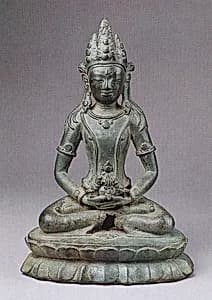
Seated Amitāyus, the Buddha of Eternal Life
Unknown Artist
ca. 11th–12th century
Medium
Bronze
Dimensions
H. 9 3/8 in. (23.8 cm)
Classification
Sculpture
Culture & Period
Burma · Pagan period
Department
Asian Art
Museum
Metropolitan Museum of Art, New York, NY
Credit
Gift of Evelyn Kossak, The Kronos Collections, 1986
Accession Number
1986.501.7
Rights
Public Domain
Tags
Art Historical Context
This elegant bronze sculpture of Seated Amitāyus, the Buddha of Eternal Life, dates to the Pagan period in Burma (present-day Myanmar) during the 11th–12th centuries. Created at a time when Buddhist devotion flourished under royal patronage, the figure embodies themes of longevity and compassion central to Mahayana traditions. Standing just over nine inches tall, the compact size suggests it was likely made for personal worship or as a portable devotional object within temples or household shrines. Cast in bronze, the sculpture highlights the technical skill of Pagan artisans who excelled in metalwork to produce durable, finely detailed images. The medium allowed for intricate modeling of the Buddha’s serene posture and symbolic attributes, such as meditative hand gestures, which conveyed spiritual ideals to worshippers. As part of the Metropolitan Museum’s Asian Art collection, this piece reflects the rich exchange of Buddhist ideas across Southeast Asia during this era. Its donation by Evelyn Kossak from the Kronos Collections underscores ongoing efforts to preserve and share these cultural treasures with modern audiences.