
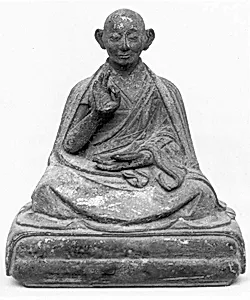
Seated Arhat (Buddhist Saint)
Unknown Artist
17th–18th century
Medium
Gilt bronze
Dimensions
H. 3 7/8 in. (9.8 cm)
Classification
Sculpture
Culture
Tibet
Department
Asian Art
Museum
Metropolitan Museum of Art, New York, NY
Credit
Rogers Fund, 1912
Accession Number
12.37.164
Rights
Public Domain
Tags
Art Historical Context
This exquisite *Seated Arhat (Buddhist Saint)*, crafted by an unknown Tibetan artist in the 17th–18th century, captures the serene wisdom of an enlightened disciple of the Buddha. Arhats, revered in Tibetan Buddhism as saints who have achieved nirvana, were often depicted in meditative poses like this one, seated in a relaxed yet dignified posture symbolizing spiritual mastery. Measuring just 3 7/8 inches (9.8 cm) high, its intimate scale suggests it was likely a personal devotional object for private altars or portable shrines, allowing devotees to carry divine inspiration in their daily lives. Forged in gilt bronze—a luxurious medium where a bronze core is meticulously overlaid with gold—this sculpture exemplifies Tibetan metalworking prowess. The gilding not only enhances its radiant glow, evoking the golden light of enlightenment, but also underscores the object's sacred status, as gold symbolized purity and the divine in Buddhist iconography. Such techniques, refined over centuries in Himalayan workshops, blended Indian influences with local artistry, making these figures enduring emblems of faith. Acquired through the Rogers Fund in 1912 and housed in the Metropolitan Museum of Art's Asian Art Department, this piece offers a window into Tibet's rich Buddhist heritage, inviting visitors to contemplate the quiet power of spiritual attainment.